

Introduction
Many Industrial facilities covered under the MSGP are required to use two complementary types of stormwater monitoring to demonstrate permit compliance and verify that their Best Management Practices (BMPs) are working effectively.
Quarterly Visual Monitoring (QVM) focuses on simple, on-site stormwater sampling during a qualifying storm event. Findings are documented on standardized forms, reviewed for trends over time, and used to flag potential pollutant sources.
Analytical monitoring, or Discharge Monitor Report (DMR), provides a more detailed, laboratory-based assessment of stormwater quality at industrial outfalls. These lab results are then compiled and reported through Discharge Monitoring Reports (DMRs) or electronic systems such as Florida’s EzDMR.


Quarterly Visual Monitoring (QVM)
Definition & Description
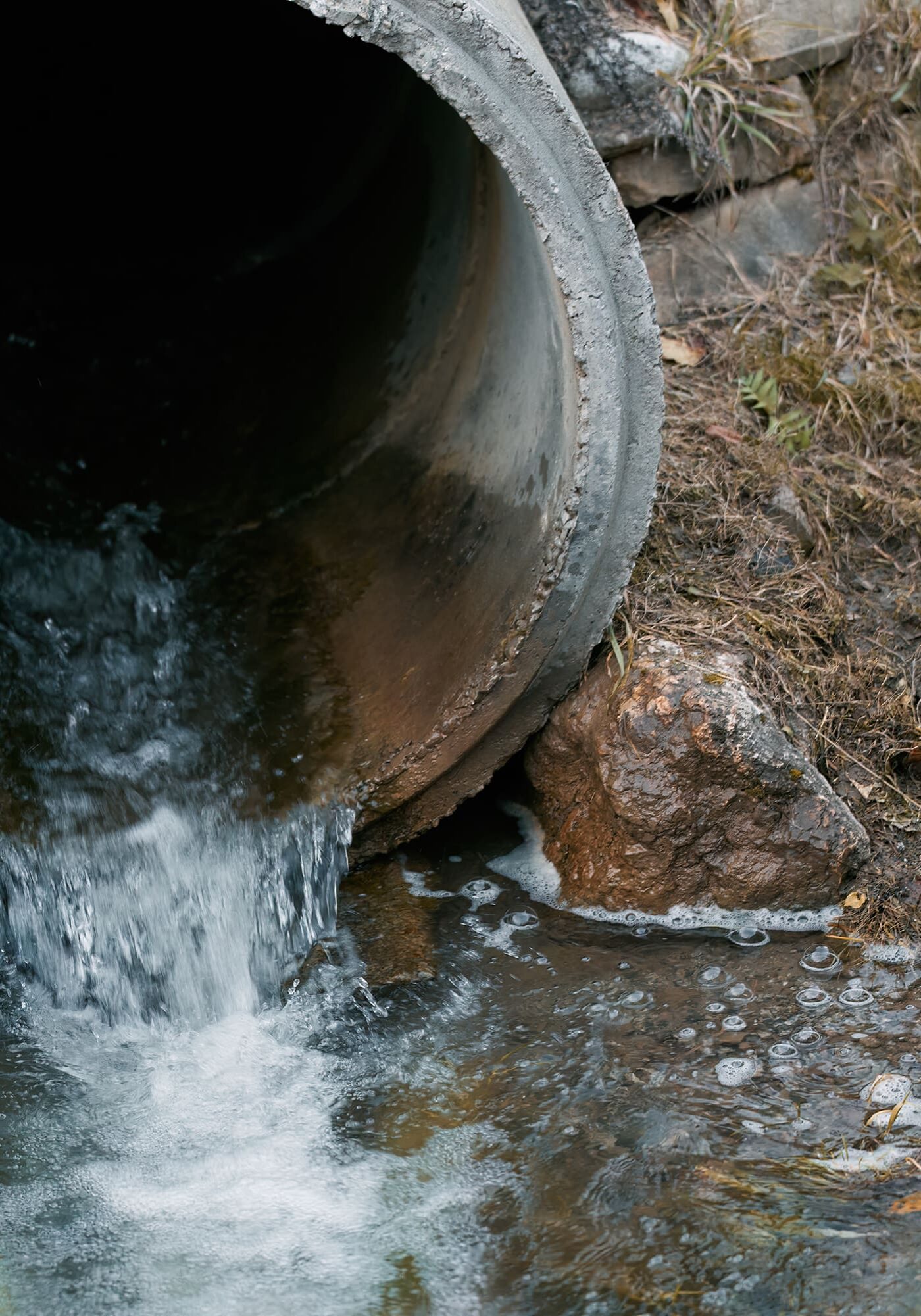
Quarterly Visual Monitoring (QVM) is a required Industrial MSGP inspection that evaluates stormwater discharges using visual and sensory observations (e.g., color, clarity, odor, floatables) to quickly identify contamination and assess BMP effectiveness at each outfall.
Process
Conduct quarterly during a qualifying storm event.
Go to designated outfalls identified in the SWPPP.
Collect a stormwater discharge sample.
Observe key indicators, including sheen, turbidity, solids, and odor.
Record observations on standardized QVM forms.
Compare results with previous inspections to identify trends.
Identify potential pollutant sources if issues are observed.
Implement corrective actions as needed.
Update BMPs and revise the SWPPP documentation accordingly.
Discharge Monitoring Reports (DMRs)
Definition & Description
A Discharge Monitoring Report (DMR) is the formal record of laboratory-analyzed analytical monitoring of stormwater sample results required under the Multi-Sector General Permit, used to evaluate pollutant levels against benchmark thresholds and demonstrate regulatory compliance.
Process
Determine sampling schedule based on sector requirements (typically conducted quarterly in Years 2 and 4 of the permit).
Identify designated outfalls listed in the SWPPP.
Monitor weather and conduct sampling during qualifying rain event.
Collect stormwater samples following proper protocols.
Preserve samples and submit them to a certified laboratory for analysis (e.g., TSS, oil & grease, metals, pH).
Compile laboratory results into a Discharge Monitoring Report (DMR).
Compare results to sector-specific benchmark values to identify any exceedances.
Submit the DMR electronically (e.g., via EzDMR).
Evaluate BMP effectiveness and implement corrective actions if needed.
Update the SWPPP to reflect any changes or improvements.

KCI Industrial Monitoring as a Service
Overview
KCI acts as a full-service compliance partner, helping industrial facilities meet Florida's Multi-Sector Generic Permit (MSGP) requirements through accurate monitoring, reporting, and proactive program management.
KCI provides a full, step-by-step stormwater monitoring service:
Automated rainfall monitoring to determine eligibility for sampling opportunity.
Proactively instruct client on optimal time to perform Quarterly Visual Monitoring (QVM) and Discharge Monitoring (DMR).
Qualified cooler set up for transport to a state-certified lab.
- Coordinate with certified laboratory for sample analysis.
Assist with data entry and submittals in the EzDMR system.
Through ongoing data evaluation and site inspections, KCI identifies risks, corrective actions, and assist to optimize BMPs to reduce exceedances and ensure continuous compliance, while also supporting permit renewals and regulatory audits. We provide clients with a reliable, turnkey “compliance as a service” solution that minimizes risk and administrative burden.