Some of you may remember the classic 1980s animated series Inspector Gadget. The show followed a well-meaning but awkward crime fighter equipped with an endless supply of hidden gadgets, many of which were as unpredictable as they were impressive. Behind the scenes, Inspector Gadget relied heavily on his sharp-thinking niece Penny and his loyal dog, Brain, to actually solve the case.
While fictional and comical, the premise still rings true today: even the best “inspector” is only as effective as the tools, support, and resources behind them.

Unlike Inspector Gadget, a KCI field stormwater inspector uses specialized tools with precision, accuracy, and purpose. Successful inspections don’t happen by chance—they are the result of preparation, organization, and a strong team working together behind the scenes to solve real-world environmental challenges encountered every day in the field.
All land-disturbing activities that disturb one acre or more—or that are part of a larger common plan of development—are required to be covered under the Florida Department of Environmental Protection (FDEP) Construction Generic Permit (CGP). The CGP is Florida’s NPDES construction stormwater permit and must be in place prior to land disturbance.
Under the CGP, a certified and trained stormwater inspector must conduct inspections every seven days, or within 24 hours of a rainfall event producing 0.5 inches or more of rain. These inspections include reviewing disturbed areas such as material storage zones, stabilized construction entrances and exits, and erosion and sediment controls identified in the project’s Stormwater Pollution Prevention Plan (SWPPP).
Florida regulations require that certified inspectors evaluate all erosion and sediment control measures outlined in the approved plan. The mission is clear: confirm controls are properly installed and maintained, erosion is being managed effectively, offsite sedimentation is prevented, and turbidity impacts to receiving waters are avoided.
Throughout the construction development lifecycle, erosion and sediment controls must remain in good working condition until the site reaches final stabilization. Stormwater inspections are required for the duration of the project to identify areas of non-compliance early and ensure corrective actions are taken before issues escalate.
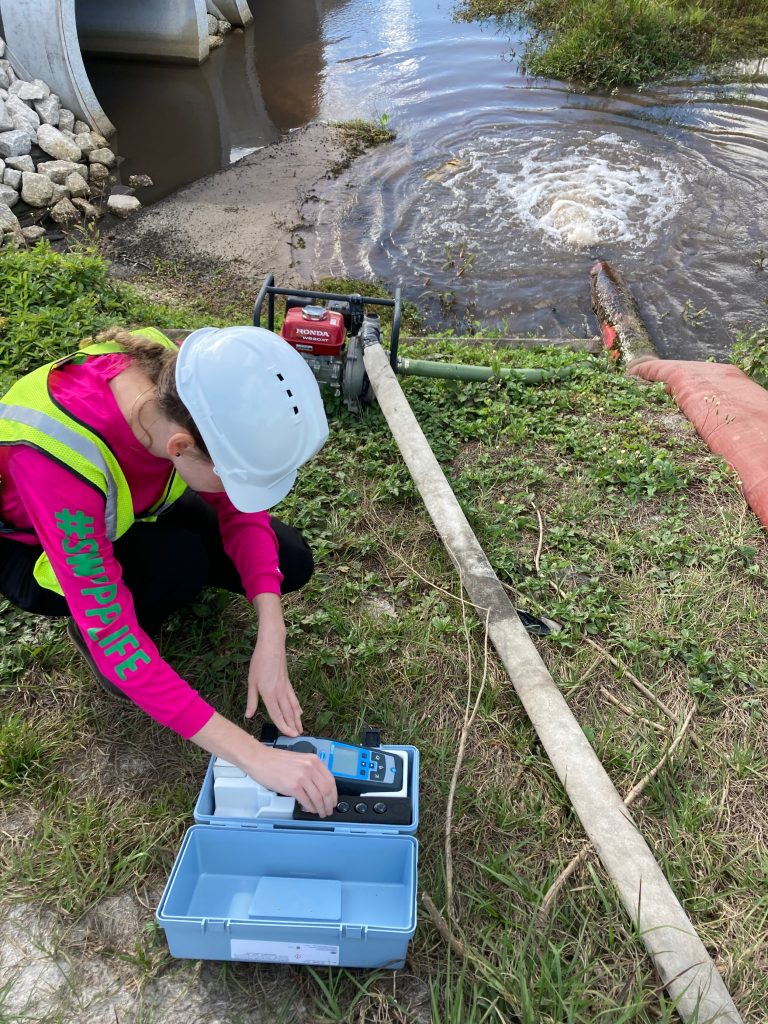
At KCI, our certified stormwater field consultants and inspectors are equipped with the tools and resources needed to succeed. Just as important, they are supported by a customer-focused organization and a fully trained internal team—from operations to field management—ready to assist whenever needed.
KCI invests heavily in training our inspectors to use their tools effectively and consistently. A high-quality stormwater inspection requires more than experience; it requires the right equipment. Key tools include:
- Technology, such as laptops, tablets, and specialized software, to document inspections and manage compliance reporting electronically.
- Personal Protective Equipment (PPE) to ensure safety in active construction environments.
- Field and office supplies to update SWPPP site maps and document on-site changes accurately.
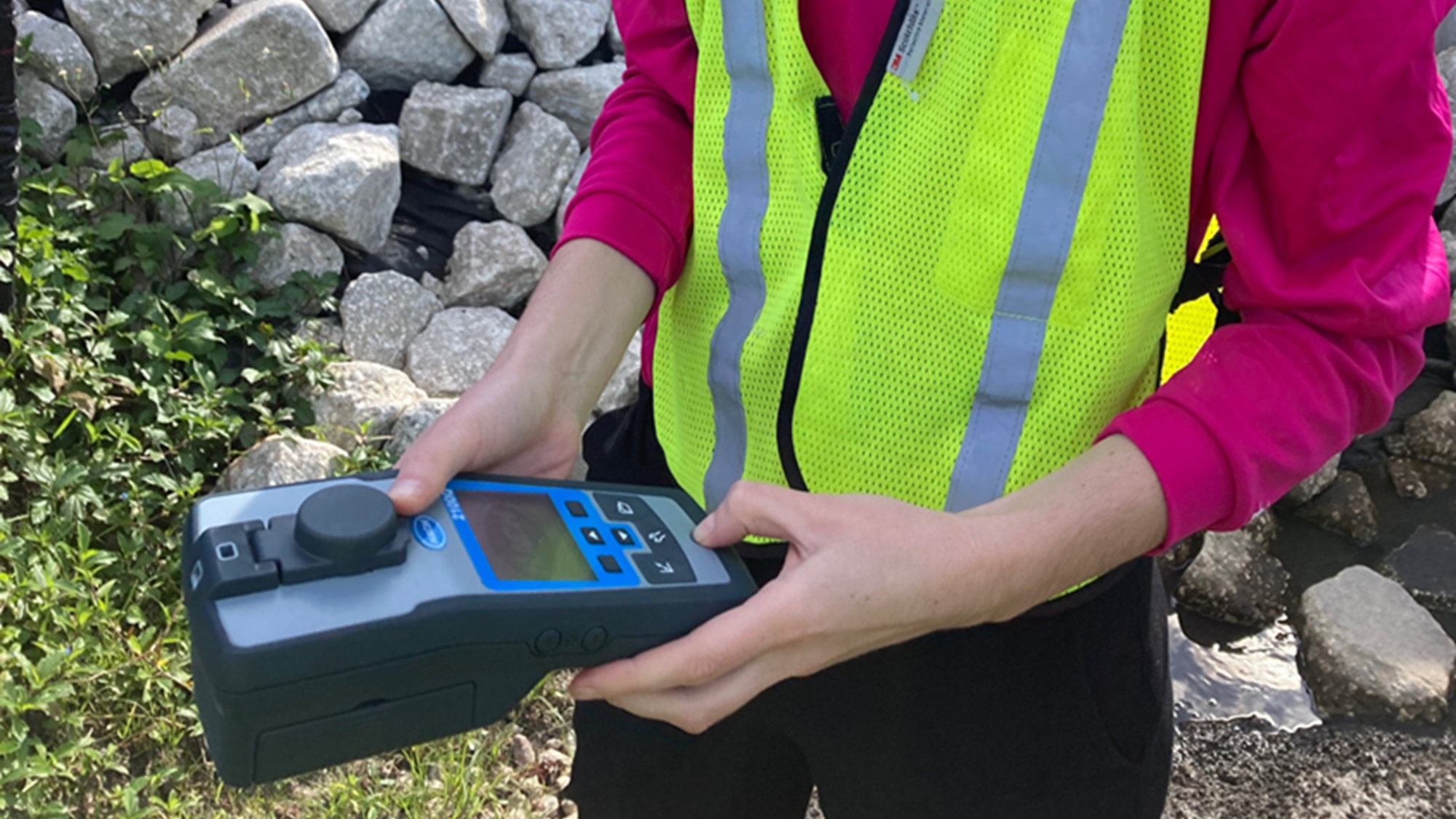
- Turbidity measurement devices to assess water clarity in nearby receiving waters.
KCI stormwater inspector’s backpack is a mobile command center. Stocked with essential field tools such as a measuring wheel for accurate site measurements, binoculars for safely inspecting hard-to-reach areas, and field technology to capture photos, document conditions, and update reports in real time, these supplies allow inspectors to work efficiently without missing critical details.
All KCI employees are certified stormwater professionals. When you hire KCI, you’re not just hiring an inspector—you’re hiring a fully equipped team, ready to put the right tools to work and protect your project, your schedule, and the environment.