Stormwater control during construction really comes down to one key issue: impervious surfaces. As soon as you start adding concrete, asphalt, or even heavily compacted soil, water can no longer soak into the ground. That means more runoff, faster flow, and a lot more sediment moving across the site.
To keep things simple, temporary controls are used during construction, and permanent systems are what remain after the job is done. Both are important, but they serve different purposes.
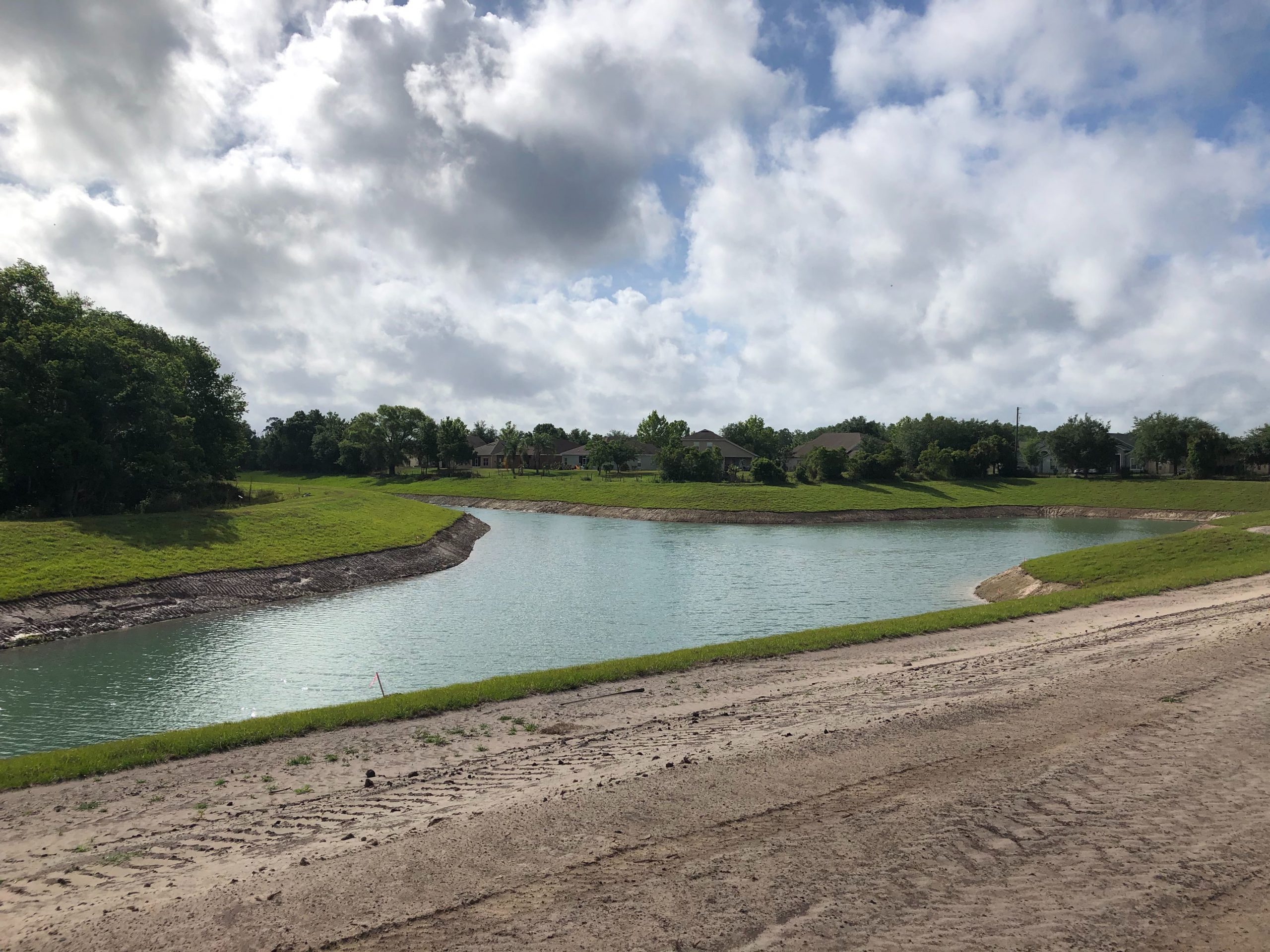
A temporary sediment basin is basically a holding area for stormwater runoff while the site is still disturbed. As impervious areas increase, water moves quicker and carries more sediment with it. The basin slows that water down so sediment can settle out before it leaves the site. These basins are usually in place for about 18 months or until the site is stabilized.
For larger sites, especially 10 acres or more, the Florida Department of Environmental Protection requires specific desgined basins under the Construction Generic Permit. That is because large disturbed areas combined with growing impervious coverage can create a serious runoff problem if it is not controlled. The basin needs to be sized correctly, built with stable slopes, and designed to handle higher flow velocities.
Where you put the basin matters just as much as how you build it. It should be located where runoff naturally flows, typically in a low area, so it can capture as much water as possible. This becomes even more important as more impervious surfaces are added and drainage patterns become more concentrated.
Sometimes these temporary basins are turned into permanent systems, but that is not automatic. If a basin is going to stay, it has to be redesigned by an engineer to meet permanent stormwater requirements.
Permanent systems like detention and retention ponds take over once construction is complete. At that point, impervious surfaces are fully in place, and stormwater can no longer infiltrate like it used to. These ponds are designed to manage that long term runoff by slowing it down, storing it, and releasing it in a controlled way. The challenge is that they require space, which is not always easy to plan for on tight sites.
Retention ponds are designed to permanently hold water, allowing it to infiltrate into the ground or evaporate over time. Detention ponds temporarily store stormwater and then slowly release it through an outlet structure. Both pond types help manage stormwater by reducing flooding, minimizing erosion, and improving water quality from increased runoff from impervious areas.
Temporary or permanent sediment basins, especially during construction, are expected to be inspected on a routine basis and after a rain event causing stormwater runoff to occur on the site. The primary objective for all inspections is to review and determine any maintenance that may be required to ensure sediment accumulation remains below 50 percent.
Site developers and contractors must successfully integrate a storm drain system and sediment controls into their site designs and plans. KCI is here to help. Call us today at 888-346-7779.