

There are certainly advantages and disadvantages for using permeable surfaces. The top two benefits for porous surfaces are the reduction of pollutants discharged in runoff by filtering stormwater and stormwater runoff volume. Adversely there are some disadvantages. First, they tend to have less structural strength than conventional pavements therefore the goal is to minimize using in high traffic areas. Secondly, they have a tendency at times to require increased maintenance.
When most of stormwater flows down a storm sewer system when it rains, impervious surfaces, such as asphalt and concrete, prevent stormwater from being absorbed properly into the ground to replenish groundwater in underground aquifers.
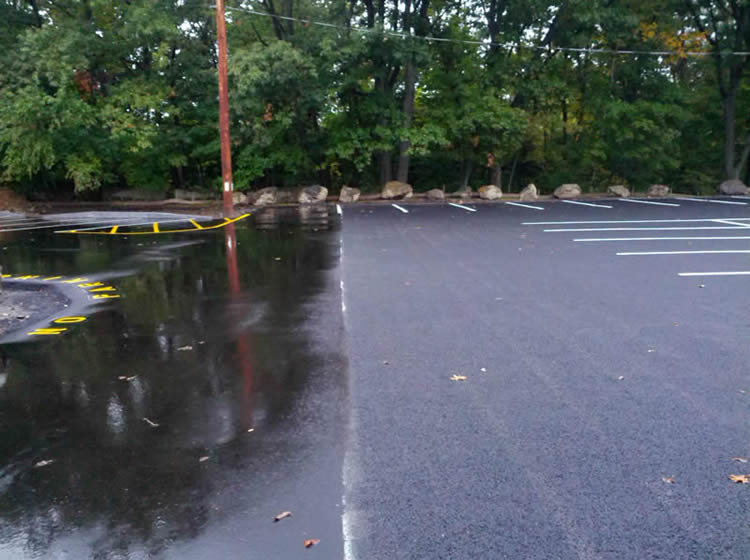
Permeable surfaces allow water to penetrate into the ground allowing the soil to perform its job by removing pollutants that may be present in the water. KCI, being in the stormwater compliance business, we believe it is always a great benefit if we can increase groundwater recharge and reduce stormwater runoff volume.
Permeable surfaces are gaining interest in the construction industry. At KCI we primarily focus on stormwater and helping clients with erosion control. We can also help consult with clients when it makes sense for an environmentally conscious solution like porous pavement. Call us today at 888-346-7779.